Apply Now


About Mechanical Engineering
Salient Features
Infrastructural Facilities
- Modern state-of-the-art infrastructure.
- Updated and innovative curriculum aligned with the UGC and AICTE-CBC norms.
- Highly qualified and experienced faculty members.
- Modern-age classrooms with LED and modern in-class infrastructure.
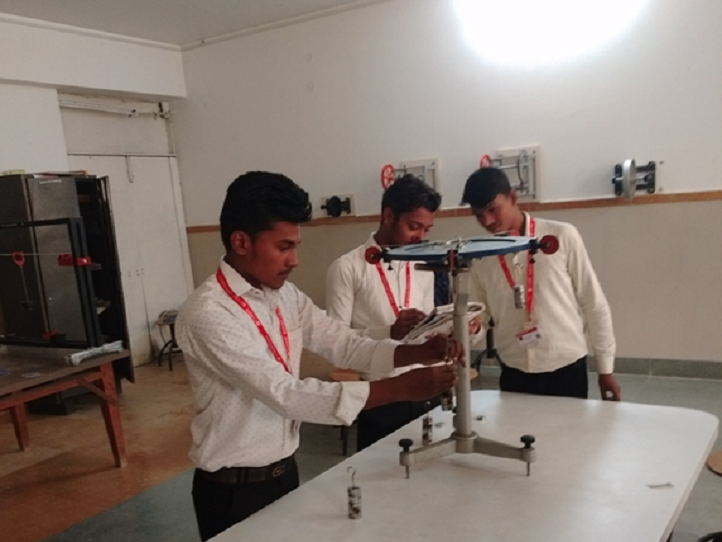
- Modern and well-equipped laboratories with the latest lab equipment.
- Departmental library with the latest editions with a well-equipped seating facility.
- Sufficient quantity of computers.
- Software like PSCAD, MATLAB, PLC & SCADA, and ETAP.
- Modern and well-equipped hostel facilities.
Opportunities
- Academics and Research
- Consultancy Firms
- Manufacturing Companies
- Instrumentation and Telecommunication Engineering.
- Electrical Design Engineering.
- Electric Vehicles and Automobile sector.
- Solar Energy sector.
- Software Engineering.
Vision
- Create globally competent mechanical engineers capable of working in an interdisciplinary environment, contributing to society through innovation, entrepreneurship and leadership.
Mission
- To Produce Ethically and Morally strong Mechanical Engineers with excellent knowledge of theoretical and practical knowledge for societal development.
- To Prepare Students for a competitive environment for sustainable growth.
- Enabling students to be members of interdisciplinary teams and capable of adapting to the advancement of technology and society.
- Inculcate critical and deep-thinking abilities among students and develop entrepreneurial skills, innovative ideas and leadership qualities.
- Achieving excellence in Education, research, innovation and consultancy.
International Networks
- The Department has signed MoUs for Industry and Institution interaction.
- Long tradition of organizing guest lectures, training workshops, and faculty development programs.
- Networks for national and international placements.
- Networks with global/international universities which help the students in student exchange programs and getting an international placement.
Innovative and Creative Curriculum
- Technologically updated curriculum with the latest knowledge and trends in the field.
- Student-centric curriculum which is continuously updated to make it relevant to the current advancements in the field.
- Curriculum embedded with global and international trends, which helps the students to work and study further in a globalized international setting.
Program Outcomes (POs)
| PO-1 | Engineering knowledge: Apply the knowledge of mathematics, science, engineering and technology to the solution of complex mechanical engineering problems. |
| PO-2 | Problem analysis: Identify, formulate, review existing literature, and analyze complex engineering problems to reach substantiated conclusions using first principles of mathematics, natural sciences, and engineering sciences |
| PO-3 | Design/Development of solutions: Design solutions for mechanical engineering problems and design system components or processes that meet the specified needs with appropriate consideration for societal, economical and environmental considerations. |
| PO-4 | Conduct investigations of complex problems: Use research-based knowledge and research methods including design of experiments, analysis and interpretation of data, and synthesis of the information to provide valid conclusions. |
| PO-5 | Modern tool usage: Create, select, and apply appropriate techniques, resources, and modern engineering and IT tools including prediction and modeling to complex mechanical engineering activities with an understanding of the limitations |
| PO-6 | The engineer and society: Apply reasoning informed by the contextual knowledge to assess societal, health, safety, legal and cultural issues and the consequent responsibilities relevant to professional engineering practice. |
| PO-7 | Environment and sustainability: Understand the impact of the professional engineering solutions in societal and environmental contexts, and demonstrate the knowledge of, and need for sustainable development. |
| PO-8 | Ethics: Apply ethical principles and commit to professional ethics and responsibilities and norms of the engineering practice. |
| PO-9 | Individual and team work: Function effectively as an individual, and as a member or leader in diverse teams, and in multidisciplinary settings. |
| PO-10 | Communication: Communicate effectively with the engineering community and with society at large, including the ability to comprehend, create effective reports, make effective presentations, and give and receive clear instructions. |
| PO-11 | Project management and finance: Demonstrate knowledge and understanding of the engineering and management principles and apply these to one’s own work, as a member and leader in a team, to manage projects and in multidisciplinary environments. |
| PO-12 | Life-long learning: Recognize the need for, and have the preparation and ability to engage in independent and life-long learning in the broadest context of technological change. |
Program Specific Outcomes (PSOs)
| PSO-1 | Apply mechanical and interdisciplinary knowledge to analyze, design and manufacture products to address the needs of the society. |
| PSO-2 | Apply state of the art tools and techniques to conceptualize, design and introduce new products, processes, systems and services. |
Career Opportunities in Mechanical Engineering

Automobile Industry
India has a growing automobile sector, and mechanical engineers play a crucial role in designing, manufacturing, and maintaining vehicles.
Design Engineer
Design engineers are professionals who conduct extensive research to design and develop new products along with the manufacturing process needed to create the products.
Mechanical Engineer
A mechanical engineer is responsible for developing, designing, and manufacturing different components of a product while also enhancing their overall performance and efficiency.
Assistant Mechanical Engineer
An assistant mechanical engineer is someone who assists in repairing and refurbishing different kinds of vehicles and mechanical equipment.
Fee Structure & Eligibility
| Programme | Sem | Year | Mode | Eligibility | Academic Fees Per Year (INR) |
|---|---|---|---|---|---|
School of Engineering & Technology (UG) (First and Direct Second Year) |
|||||
| B.Tech (Mechanical Engineering) | 8 | 4 | Sem | Candidates must have 45% marks in 10+2 and 45% in PCM compulsory OR Pass 3 years Diploma examination with at least 50% marks.(For Lateral Entry / Direct Second Year) | Rs. 90,000/- |
Note:
- Forms and Prospectus: ₹500 /- (One Time)
- Hostel Security Deposit: ₹5000 /- (One Time)
- Hostel Fees: ₹75,000 /- (Per Year)
- Uniform Cost: ₹5,500/- (At the Time of Admission)
- Convocation and Certificate : ₹3,000 /-(Final Year)
- University Caution Money: ₹3,000 /- (Refundable)
- Hostel Rooms Allotment at the discretion of the Hostel Supervisor
- Hostel rooms are with bunk bed only
- Registration fees for Diploma & B.Sc. Agriculture & M.Sc.(Agronomy): ₹3500/-
- For all other Courses: ₹2500/-
- If any student wants accomodation in B1 Hostel, they have to pay ₹10,000/- extra per year, allotment based on availability of the Hostel room.
Lab Facility